
While headlines often focus on environmental decline, groundbreaking conservation projects worldwide are demonstrating that strategic intervention, community engagement, and innovative technology can reverse biodiversity loss. Here are five transformative initiatives worth tracking.
1. Coral IVF: Breeding Reefs Back to Life
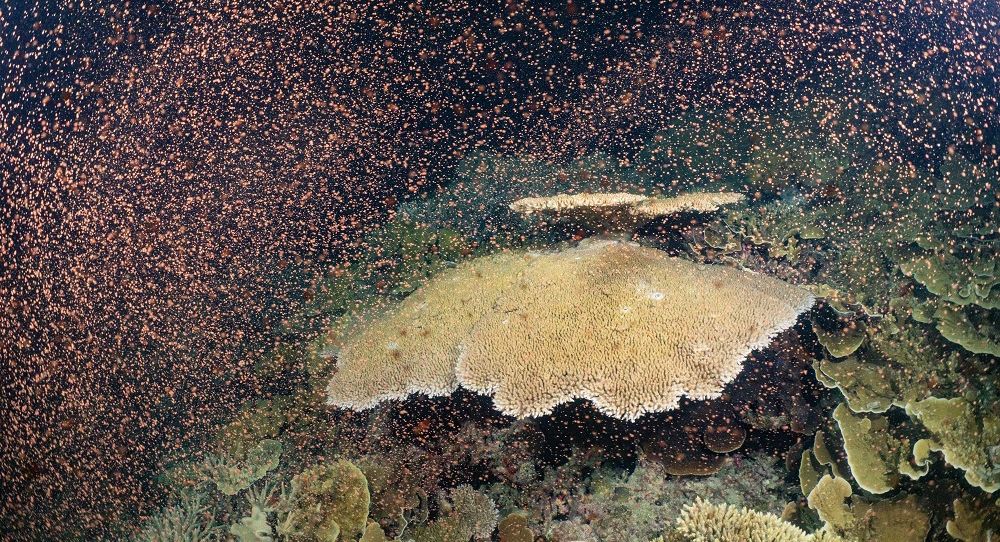
Source: Great Barrier Reef Foundation
The Great Barrier Reef Foundation’s Coral IVF program represents a revolutionary approach to saving the world’s coral ecosystems. During mass coral spawning events, researchers capture millions of eggs and sperm from healthy reefs, rear baby corals in floating nursery pools, then transplant them onto damaged reefs
What makes this project exceptional is its scalability. The Boats4Corals initiative trains local tourism operators, Traditional Owners, and recreational boaters in coral restoration techniques—turning conservation into a community enterprise
. Complementing this, Coralclip® technology allows divers to plant hundreds of corals per dive using stainless-steel clips that eliminate chemical bonding agents
Perhaps most innovative is the cryopreservation program, freezing coral sperm and eggs in liquid nitrogen as an “insurance policy” against extinction. With 3D photogrammetry tracking growth and survival rates, this project combines cutting-edge science with practical restoration at a scale previously unimaginable
2. The Return of the Wild Horses: Rewilding Kazakhstan and Spain
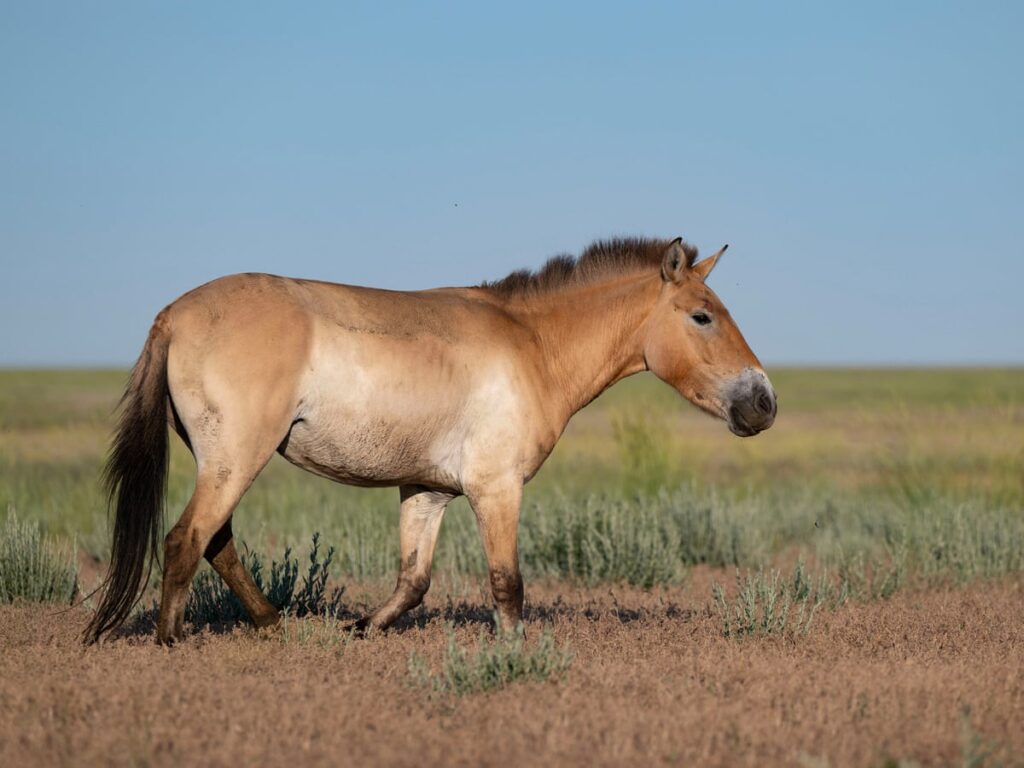
Source: The Guardian
Przewalski’s horses—the world’s last truly wild horse subspecies—are galloping back from extinction’s edge. Extinct in the wild since the 1960s, these horses are descended from just 13 individuals through zoo breeding programs
In 2025, the Prague Zoo’s Return of the Wild Horses project released seven horses into Kazakhstan’s Altyn Dala State Nature Reserve, with more releases planned
. Simultaneously in Spain, a herd introduced to Villanueva de Alcorón in 2023 has grown from 16 to 35 horses as of 2025. Conservationists hope their grazing will mitigate wildfire spread while restoring ancient ecosystems
This dual-continent approach demonstrates how rewilding can address both biodiversity loss and climate resilience—horses as ecosystem engineers shaping landscapes for the better.
3. Scottish Wildcats: From Functionally Extinct to Breeding in the Wild

Source: Rewilding Europe
The Scottish wildcat represents one of Britain’s most dramatic conservation turnarounds. Declared functionally extinct in 2019, the species is now producing wild-born kittens thanks to the Saving Wildcats project
After releasing 46 wildcats into Cairngorms National Park over three years, researchers celebrated seven females giving birth in 2024, followed by five more litters in 2025
. “Just a few years ago, the species was teetering on the edge of extinction in Scotland. Now we’re watching them not only survive but start to raise their own kittens in the wild,” says project lead Helen Senn
The success has spawned the South West Wildcat Project, planning to release 50 wildcats in England starting in 2028—proof that proven methodologies can scale across landscapes
4. Amazon Mining Watch: AI-Powered Deforestation Detection
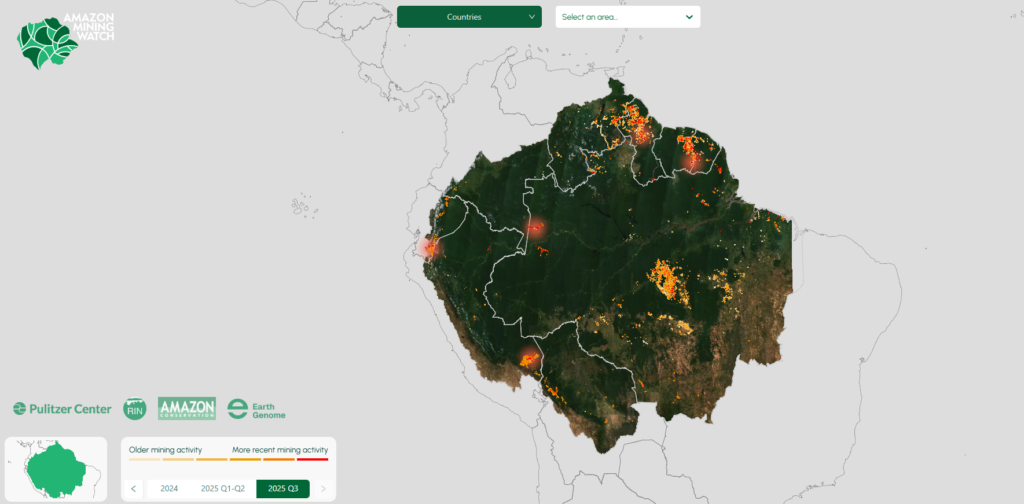
Source: Amazon Conservation Association
Technology meets conservation in Amazon Mining Watch, an AI-powered platform launched in 2025 by Amazon Conservation, Earth Genome, and the Pulitzer Center This tool provides the most comprehensive basin-wide picture of gold mining deforestation to date, enabling real-time monitoring across 478 million acres of forest in seven countries
The system’s impact is measurable: in 2025 alone, the Monitoring of the Andes Amazon Program (MAAP) produced 232 analyses, prompting 171 government enforcement actions including 18 on-the-ground operations targeting illegal mining . Four new conservation areas protecting over 3 million acres were established in Bolivia and Peru, while Indigenous communities achieved historic land title victories
This represents a new era of techno-conservation—where satellite imagery, machine learning, and community networks combine to protect the world’s largest rainforest.
5. The High Seas Treaty: Protecting the Global Ocean Commons
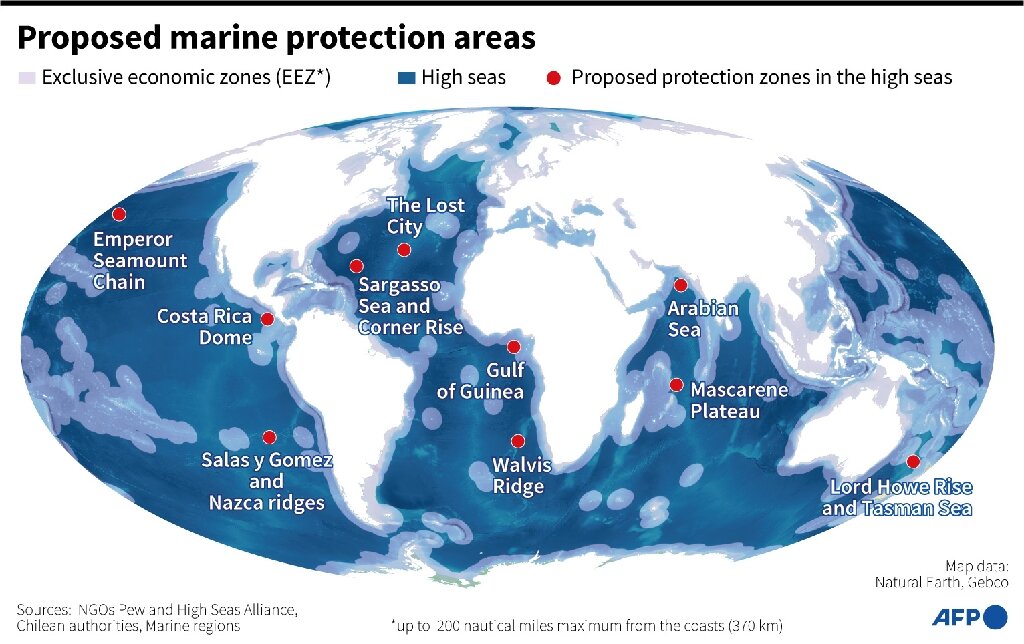
Source: Phys.org / AFP
While not a single project, the High Seas Treaty (Biodiversity Beyond National Jurisdiction) represents 2025’s most significant conservation breakthrough. Ratified in 2025 and entering into force in 2026, this landmark agreement creates the first legal framework for establishing marine protected areas in international waters
Covering 61% of the global ocean—areas beyond national jurisdiction—the treaty mandates management plans for protected areas and provides mechanisms for environmental impact assessments WWF played a pivotal role in securing this agreement, which is essential for achieving the Global Biodiversity Framework’s target of protecting 30% of the ocean by 2030
This isn’t just about drawing lines on maps—it’s about managing the two-thirds of the ocean that previously had no conservation governance, creating unprecedented opportunities for marine recovery.
Why These Projects Matter
These five initiatives share common success factors:
- Science-driven: From coral cryopreservation to AI deforestation monitoring, rigorous research underpins every approach
- Community-integrated: Local stakeholders aren’t afterthoughts—they’re primary implementers
- Technologically innovative: Drones, AI, genetic banking, and satellite monitoring multiply impact
- Scalable: Success in one location creates templates for global application
- Politically durable: Multi-year funding and international agreements ensure longevity
The Bigger Picture
As we approach 2030’s biodiversity targets, these projects offer more than hope—they offer proof of concept. They demonstrate that extinction isn’t inevitable, that degraded ecosystems can recover, and that human ingenuity can be redirected toward healing rather than harming.
The challenge now is scaling these successes from pilot projects to planetary standards. The tools exist. The knowledge exists. What’s needed is the will to fund, implement, and sustain them.
These five projects are worth watching not just because they’re succeeding, but because they’re showing us what’s possible when we choose to act.
Key Takeaways:
- Coral IVF: Millions of baby corals bred and planted using cryopreservation and community training
- Przewalski’s horses: From 13 founders to rewilding herds in Kazakhstan and Spain
- Scottish wildcats: From functionally extinct to wild-born kittens in 5 years
- Amazon Mining Watch: AI monitoring 478 million acres, prompting 171 enforcement actions
- High Seas Treaty: First legal framework for protecting 61% of global ocean
Leave a Reply